
Chief AI Officer · CAIO
Chief AI Officer: the person who decides what AI does in your company.
The CAIO is the executive who turns artificial intelligence into business results: deciding where it comes in, what gets scaled, what gets dropped, how it's measured and who answers for it. In large companies it's already a common role. In most SMEs nobody fills it, and that's why AI ends up coming in piecemeal.
Here's what a CAIO does, when your company needs one and how to have that function without hiring another executive.
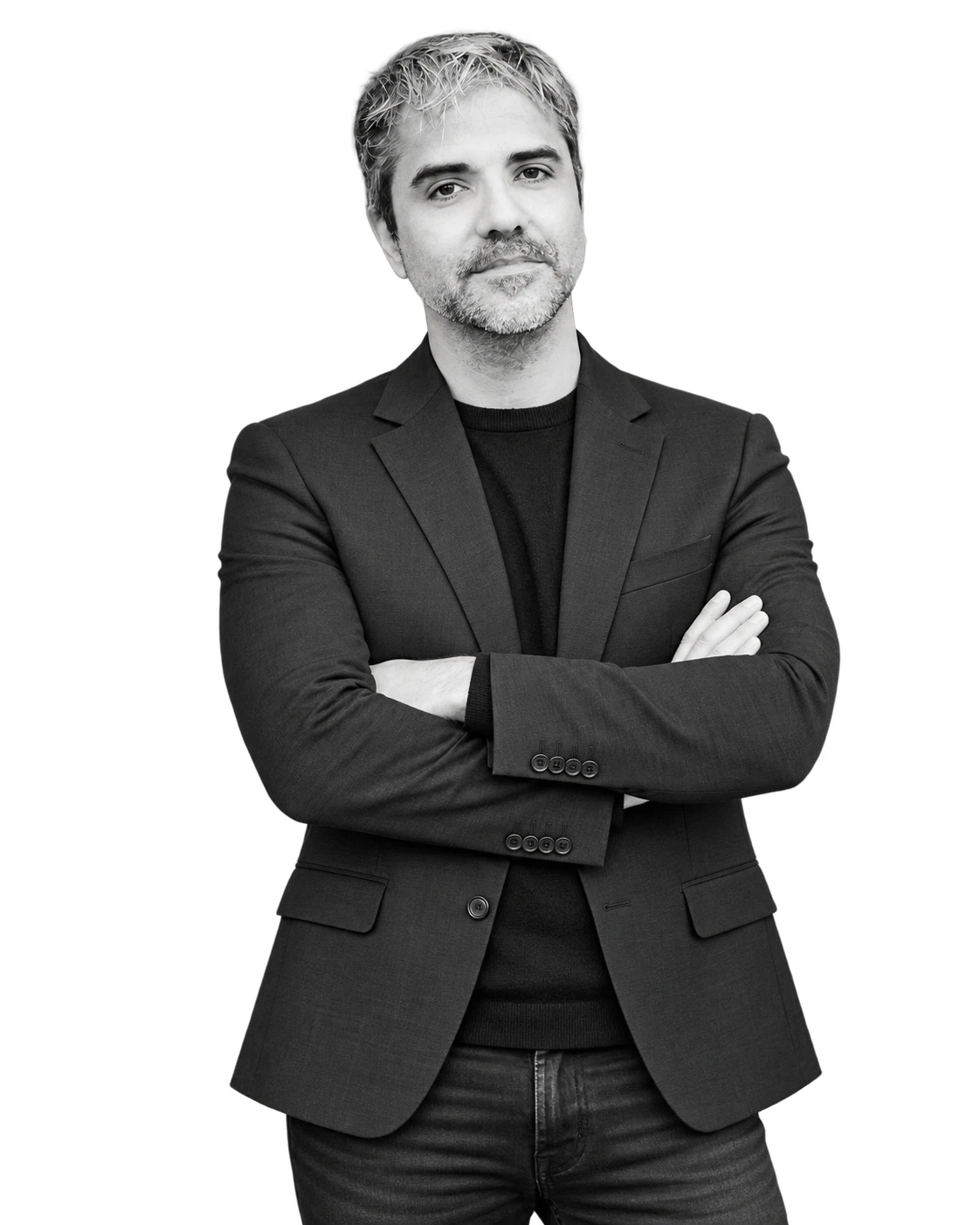
 By Diego Serrano · entrepreneur, growth and AI consultant and founder of Grooow System
Why now
- of organisations surveyed by IBM now have a CAIO, in just one year.
- 26% → 76%
- of CEOs say AI success depends more on people adopting it than on the technology.
- 83%
- of enterprise generative AI pilots never show up in the profit and loss account.
- 95%
- since then, the EU AI Act has required companies that use AI to make sure their people know how to (Art. 4).
- Feb 2025
What it is (and what it isn't)
A business executive, not an engineer.
The CAIO answers to the leadership team for one thing: that AI delivers real value, under control. They connect the people who know the business with the people who know the technology, manage the AI budget and account for what it returns.
They don't replace the CTO, the CIO or the head of data: they build on them. Their job is to use technology and data to change how the company works and grows. That takes enough technical judgement not to buy hype, but above all, leadership experience.
Four roles, four questions
- CTOTechnology and productWhat do we build it with?
- CIOInternal systemsDoes what we use every day work?
- CDODataIs it reliable and protected?
- CAIOAI applied to the businessWhere does AI make us win, and at what risk?
Does your company need one?
Five signs AI is already running loose in your company.
- 1
Everyone uses their own AI tool and nobody knows with what data.
- 2
You pay for AI licences without knowing what they return.
- 3
There was a promising pilot that never made it into day-to-day work.
- 4
Nobody is in charge of the EU AI Act or of training the team.
- 5
Leadership knows AI matters, but has no time to decide where to start.
If you recognise two or more, you're not missing another tool: you're missing someone to lead AI.
What a CAIO does
Five fronts. And where each one lives in Grooow System.
This is what's expected of a Chief AI Officer in any company. On the right, where I work on it within the system.
- 01
Priorities
Picks the use cases that move the business and drops the ones that only look good. A short list, ranked by impact.
In Grooow · Strategy: roadmap and KPIs, with AI built in from the start.
- 02
Return
Every euro spent on licences, consultants or development has a goal and a metric. What doesn't pay back gets cut.
In Grooow · Finance and structure: the company's numbers show which AI earns its keep.
- 03
Governance and compliance
Which tools are used, with what data and what permissions. And the EU AI Act, in order and documented.
In Grooow · Operations: management system and knowledge base, with data under control.
- 04
People and adoption
Trains the team and changes how work gets done. Without adoption, the best tool stays a demo.
In Grooow · In every block: AI is implemented with the people who will use it, not handed to them finished.
- 05
Bridge to technology
Translates what leadership needs into what technical people build, in-house or suppliers, and checks that what's delivered solves the problem.
In Grooow · Implementation: I coordinate specialists on your behalf, with fixed scope and price.
A large company hires a CAIO. An SME needs the function, not the title.
A full-time CAIO is a leadership-team salary. And in a company of 10, 30 or 80 people there isn't five days a week of AI work; there is enough to decide well, implement in order and review every month.
That's an external, or fractional, CAIO: the same responsibility, with the time your company needs at each stage. More presence at the start, a monthly review once the system is running.
Grooow System
The CAIO function, built into the whole system.
I don't treat AI as a separate project. Grooow System brings order to the six areas every company grows with and, in every block, AI comes in once there's something that already works. The CAIO function isn't an add-on: it's how the system is built.
- 01
Strategy
What kind of company do you want to have?
With AI · Market and benchmark analysis, and a dashboard that updates itself.
- 02
Offer & pricing
What do you sell and what is it worth?
With AI · Quotes and proposals in minutes, built from your own templates.
- 03
Marketing
Can the right people find you?
With AI · Content drawn from what you already have, in your voice and with your brand.
- 04
Sales
Do you turn interest into customers?
With AI · Automatic follow-up so no opportunity goes cold.
- 05
Operations
Does the company run without constant firefighting?
With AI · AI and automation in operations: fewer repetitive tasks, more capacity.
- 06
Finance & structure
Do the numbers support the growth?
With AI · Invoices, expenses and forecasts that sort themselves.
AI multiplies what already works… and what doesn't. Order first, then AI.
See the full systemHow I work as an external CAIO
Your first months, always in this order.
The same four stages as Grooow System, seen through AI. Scope and price are agreed before we start.
- 1
AS IS · how it works today
Diagnosis
Free · 45 min
What AI is used in your company today, who uses it, with what data and what the risks are. Within 48 hours, your priorities in writing and a quick win.
- 2
TO BE · how it should work
Map
1–2 weeks
Your AI roadmap ranked by return, the usage rules for the team and what we're not going to do.
- 3
TO DO · the plan, in motion
Implementation
8–12 weeks
The chosen use cases, working day to day: assistants, automations, agents. With the team trained.
- 4
KPI · keeping it on track
Follow-up
Monthly · optional
KPIs, new opportunities and compliance kept up to date. Your external CAIO, without another salary on the payroll.
My job ends when the system works without me. And if one day you hire an in-house CAIO, they'll inherit a roadmap, not a mess.
Why me
What the role demands, and where I learned it.
A good CAIO combines leadership, business, technology and people. I didn't study any of the four on a master's: I've practised them for 25 years, in my own companies and in other people's.
- Business vision and leadership experience
- I founded and ran Broomx Technologies for 11 years: from zero to over €4M in revenue, operations in 24 countries and a team of up to 30 people with a leadership structure.
- Technology and AI, seen from the inside
- Broomx was an immersive technology and AI company: its own product, clinical validation and sales to hospitals. Today AI is at the centre of my own work: Grooow System runs with a single person.
- Defending return in front of a board
- I raised over €3M from investors such as Wayra (Telefónica) and BStartup (Banco Sabadell), and managed the company's restructuring and sale in 2025. I know how to justify an investment, and how to cut one.
- Implementing with people, not against them
- As head of systems and AI at an 18-person studio, I moved the whole team onto a single system and brought AI into quotes and tenders: from 10 to 53 projects in parallel without growing the team.
- Translating between leadership, design and technology
- I trained as a designer and ran a studio for 25 years that worked for BMW, LEGO, Nestlé and Adidas. I know how to turn a leadership goal into something a technical team can build and people want to use.
What I'm not
I'm not a model engineer and I won't sell you a platform. I've seen technology projects come to nothing up close, some of them mine, which is why I start with the problem, not the tool. When specialised development is needed, I commission and oversee it on your behalf.
Two ways to work together
With or without an AI lead on your team.
Your external CAIO
For companies where nobody fills that role. I lead AI in your company within Grooow System: diagnosis, map, implementation and a monthly review.
Alongside your team
If you already have someone leading technology or AI, or are about to hire them, I give them the method and the judgement: the system as a roadmap and support until it runs on its own.
Both start the same way: with a free 45-minute diagnosis. If I can't genuinely add value, I'll tell you on the call.
Frequently asked questions about the CAIO
Does an SME really need a CAIO?
It needs the function, not necessarily the title. If your company already uses AI, and it almost certainly does, someone should decide where it adds value, what risk it takes and what it returns. In an SME an external CAIO is usually enough: more time at the start and a monthly review afterwards.
How is it different from an AI consultancy?
A consultancy usually sells a project or a tool. A CAIO answers for the whole picture: what gets done, what doesn't, in what order and for what return, even if that means buying nothing. And I do it within a system that organises the whole company, not just the technology.
Do I need my data or technology ready?
No. The diagnosis starts from how you work today. Often the first step isn't AI, but organising processes and data so AI has something to work with.
What about the EU AI Act?
It applies in stages. Since February 2025, companies that use AI must take measures so their staff have sufficient AI literacy, and since August 2026 transparency obligations apply, such as telling people when they're talking to an AI. We review what you use, with what data and what affects you, and document it. If you need specific legal advice, I'll tell you.
How much time does an external CAIO spend?
It depends on the stage: more presence during the map and implementation, then a monthly review with KPIs. Scope and price are agreed before we start.
Do you work remotely?
Yes. I work in English, Spanish and Catalan, remotely and, when it helps, in person.
Who decides what AI does in your company today?
In 45 minutes we review how you're using it, where the risk is and where the return is. Within 48 hours you have your priorities in writing. Free, no strings attached.